Ketchikan Rain: What 150 Inches a Year Means for Your Port Day
The short answer. Ketchikan averages 149.54 inches of rain a year at its airport. June is the driest month and October the wettest, but even in summer it rains on about half the days. Boats and road tours run in the rain. Floatplanes are the exception: a pilot may delay or cancel a flight for low cloud.
Ketchikan calls itself the Rain Capital of Alaska, and it means it. A rain gauge stands outside the Visitors Center on Berth 2. The numbers behind it tell you when to come, what to pack and which trips the weather can cancel. Here they are, and what they mean for the best tours in Ketchikan Alaska.
The rain, month by month
| Month | Rain (inches) | Days with rain | Average high (°F) |
|---|---|---|---|
| January | 16.17 | 22.0 | 39.7 |
| March | 10.98 | 20.6 | 43.6 |
| May | 8.68 | 16.1 | 56.9 |
| June | 7.02 | 16.4 | 61.3 |
| July | 7.33 | 16.0 | 64.5 |
| August | 11.30 | 16.8 | 64.7 |
| September | 14.30 | 19.5 | 58.9 |
| October | 18.37 | 22.8 | 51.1 |
| November | 17.07 | 23.6 | 43.7 |
These are NOAA's 1991–2020 normals at Ketchikan International Airport. The full twelve months are on Ketchikan weather by month.
Facts about the rain that surprise visitors
- October is wetter than midwinter. It averages 18.37 inches, more than January's 16.17.
- The record year was 1949, with 202.55 inches. That is just over five metres of water.
- The driest month still rains a lot. June averages 7.02 inches over about 16 wet days.
- Summer is cool. The warmest months, July and August, average highs of about 64°F.
- Every month is more wet than dry. Each averages rain on more than half its days, and November has the most, 23.6.
- Winter is mild for Alaska. January's average low is 31.5°F, only just below freezing.
- The weather turns in late summer. Rain jumps from 7.33 inches in July to 11.30 in August and 14.30 in September.
What the rain grows
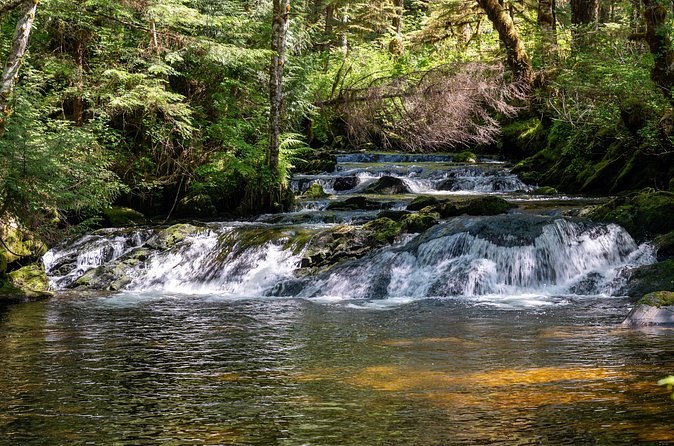
Ketchikan sits on Revillagigedo Island in Southeast Alaska, and its rain feeds the Tongass National Forest around the town. The Forest Service calls the Tongass a nearly 17-million-acre temperate rainforest, the largest national forest in the United States. The moss, the creeks and the salmon all depend on the water. So does the look of the town you came to see.
The rain also shaped the town's history. Ketchikan grew up around a salmon saltery in the mid-1880s, beside a creek full of fish. More of that story is on Ketchikan facts.
What rain changes on the water
Almost nothing, for the boats. They sail in rain as a matter of course, and most give you a way to stay dry.
- A cabin: the wildlife and whale watching quest has indoor seats, blankets and hot drinks.
- A heated deck: the crab boat seats you in an enclosed, heated amphitheatre and hands out raincoats.
- Full gear: the open Zodiac expedition dresses you in rain gear and waterproof overboots.
- An enclosed boat: the Tales and Tides cruise stays under cover in Clover Passage.
Every whale boat is compared on Ketchikan whale watching tours.
What rain changes in the air
Floatplanes are the trips the weather is most likely to stop, and cloud matters more than rain. The pilot needs to see the cliffs of Misty Fjords, and a low ceiling can delay or cancel a flight. Several July and August 2026 reviews of one Misty Fjords flight describe cancellations for weather. Nobody can predict that before you book.
So read the refund terms before you pay. One flight refunds in full up to 24 hours ahead. The flight with a water landing refunds nothing once booked. The choice between flying and sailing is in a floatplane or a whale boat.
What rain changes on land
Road and walking tours carry on. Many guides treat the rain as part of the place. One traveller's photo safari guides showed the group how to use the rain in their pictures. On the trolley loop, another traveller said a cheerful driver made a very wet day worthwhile, with totem poles and pink salmon to show for it. If you want a roof, the Discovery Center and the Totem Heritage Center are both indoors. The Rainforest Sanctuary walk goes into the forest with a naturalist.
Rain and the wildlife
The animals you come to see do not stop for rain either. Ketchikan Creek fills with spawning salmon each July and August, whatever the weather. Watch them from the planks of Creek Street or the bridges over the creek. The road tours that look for bears say your chances improve from mid-July, when the salmon are running. Eagles, seals and whales are out on the water in any weather, so a grey day can still be a good wildlife day.
A wet port day, hour by hour
If the forecast is for heavy rain, plan around the roofs. Start at the Discovery Center when it opens at 8am, and spend an hour on the Tongass and its people. Walk Creek Street next, with your hood up, and look for salmon from the bridges. Then take a boat with a cabin or a heated deck for the middle of the day.
Finish at the Totem Heritage Center, which stays open until 5pm from May to September. Its original poles are all indoors. Keep half an hour for the walk back to your berth. Where each ship docks, and how far each tour starts from it, is on Ketchikan cruise port.
Rain outside the cruise season
October and November are the wettest months, with more than 22 days of rain each on average. The town is quieter then, and the indoor sights cut their hours. From October to April the Discovery Center opens only on Fridays and Saturdays, with no entry fee. The Totem Heritage Center opens on weekday afternoons. Most tours are sold for the summer cruise season, so a winter visit is a town visit.
What to pack
Bring a waterproof shell with a hood, a warm layer and shoes that grip on wet boards. Leave the umbrella behind: you need both hands on a boat. Several tours lend rain gear, including the crab boat, the Zodiac and the private rainforest beach walk. Indoor ideas for a wet hour are on things to do in Ketchikan.
Tours built for a wet day
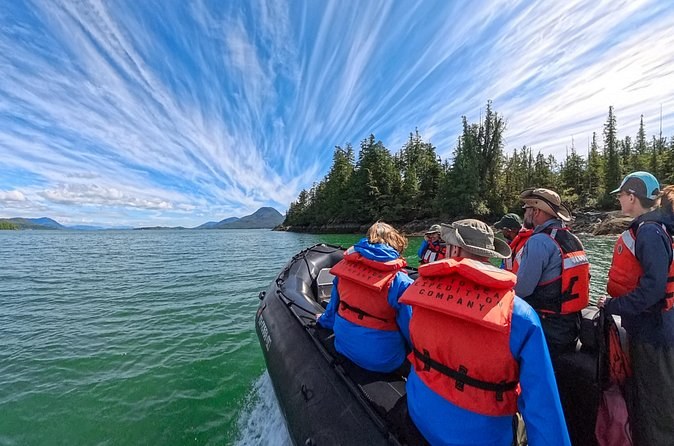
Alaska Ocean Wilderness Expedition
Twelve at most in an open Zodiac with a naturalist, in full rain gear and overboots, for 2 hours 20 minutes on the water.
From $209 per person
Check Availability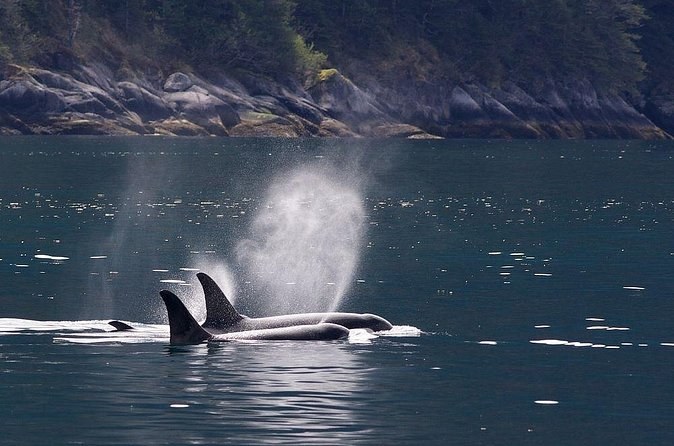
Tales & Tides: Alaskan Lore & Wildlife Cruise
An enclosed boat in Clover Passage with local storytellers aboard, reached by van from town, with children from age 3.
From $189 per person
Check Availability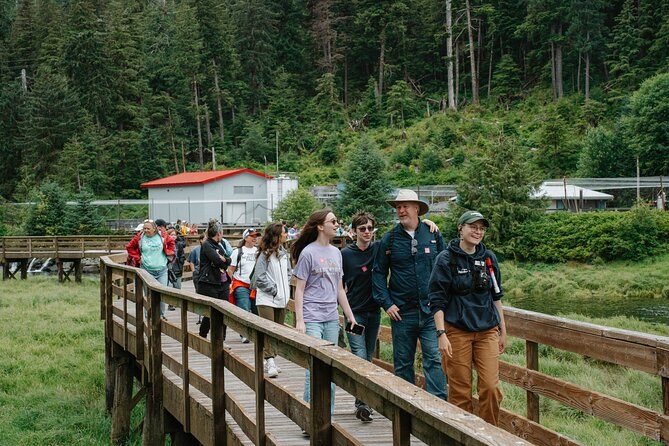
Ketchikan Rainforest Sanctuary and Totem Park
Two hours on foot in the Alaska Rainforest Sanctuary with a naturalist, entry included and wheelchair accessible.
From $110 per person
Check AvailabilityNext: pack for rain, then choose a boat with cover or a flight with the refund you want. Every fare sits side by side on Ketchikan Alaska Tours.